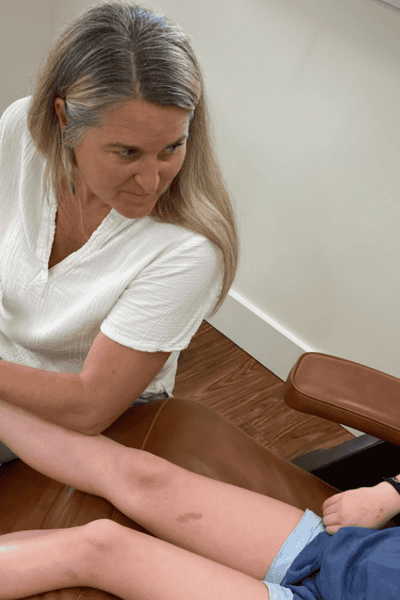
Earlier this year, I sat in a college conference room surrounded by people who received foot zoning training from this school or that and, on paper, do what I do.
It was a foot zoning conference, the kind of gathering that should feel like coming home. These are supposed to be my people, the practitioners, teachers, schools that have their own training programs, and students of a modality I have devoted over two decades of my life to. And there were beautiful people in that room, sincere people, people who found this work the same way I did, through a moment of healing they could not explain and could not walk away from.
But I left that conference troubled, and I have been sitting with why ever since.

This post is my answer.
It is about the differences between Foot Zoning, as it is most commonly taught today, FootZonology, and the distinct method I developed and teach, Integrative Foot Zoning™.
It is about why so many students who receive training and graduate from three- and four-month programs feel a gap in their education they cannot quite name.
And it is about something I want you to hold onto whether you ever study this work or not: your education matters, and who you let work on your feet matters.
What I Saw at the Conference
Let me start with what troubled me, because I think it explains everything else.
Half of the board members of the organization hosting that conference do not actively practice foot zoning.
Let that settle for a moment.
The people setting the standards for a hands-on healing modality are not, themselves, doing the work. They are not sitting with clients week after week, reading feet. They are not watching a body change across a series of sessions, adjusting their approach, deepening their understanding through the ten thousand small corrections that only practice provides.
Imagine a medical board where half the members had not seen a patient in years, and you begin to understand my concern. In any discipline, when leadership drifts away from practice, the standards drift with it.
Teaching drifts.
Rigor drifts.
And the students, who trusted that someone upstream was guarding the depth of their education, inherit the gap.

The second thing I saw troubled me even more. School after school represented at that conference is now teaching students to work the feet with tools: crystals, dowels, rods, instruments of every kind placed between the practitioner’s hand and the client’s foot.
I want to be careful and fair here.
I understand the appeal. Tools are easier to teach than sensitivity. A dowel does not require years of trained touch. But I will say plainly what I know from tens of thousands of sessions: you cannot fully analyze what you do not touch.
“You cannot fully analyze what you do not touch”
Foot zoning is two inseparable disciplines. There is the analysis, the reading of the body’s signal system through the feet, and there is the zone, the precise and ordered treatment that helps balance and reset that signal system so it connects with the body’s perfect blueprint.
The analysis happens through the eyes and the hands.
Temperature, texture, moisture, the quality of tissue under pressure, the crystallized deposits beneath the skin, the places where circulation runs hot and where it has gone cold, these are read through trained human touch, refined across thousands of feet.
Crystals cannot decipher a hardening over the liver signal.
A dowel cannot notice that the tissue yields differently today than it did three weeks ago.

Wooden rods may deliver pressure, but they receive nothing.
The moment you put an instrument between your hands and the foot, you have surrendered analysis, and without analysis, you are no longer zoning. You are pressing on the feet.
The hands were always the instrument.
The Figure Eight Flow and Why Tools Break It
Within each of us, five energy rays move in a continuous figure-eight: two channels in the palms of the hands, carrying the power of creativity and action; two in the feet, carrying the energies of grounding and connection to the Earth; and one radiating from the heart, the essence of love and compassion at the center of the whole design.

This is why every Integrative Foot Zoning™ session is structured the way it is. I begin with the client’s right foot and zone with my left hand, and the energy flows from their foot, up my arm, across my heart, and down through my right hand. When I move to their left foot, that energy is returned to them, completing the circuit back to their own heart. The right side gives; the left side receives. Between practitioner and client, a living figure-eight takes shape, creating a balanced, heart-centered exchange.
Now consider what happens when a crystal, a dowel, or a rod is placed between the practitioner’s hand and the client’s foot. The circuit is interrupted at its very first connection. The energy rays of this flow live in the palms of the hands, not in an instrument. A tool has no heart for the energy to cross, no palm to give or receive, no capacity to feel what the tissue is communicating back. The flow that was meant to move foot to hand to heart to hand to foot stops at a piece of wood or stone, and what remains is pressure without exchange, technique without connection.
The figure-eight cannot form.
This is one of the deepest reasons Integrative Foot Zoning™ is, and will always be, done skin to skin: the hands are not one way to do this work. They are the circuitry it runs on.
The Gap Students Feel but Cannot Name
Every month, I hear from graduates of other foot-zoning training programs.
Sincere, committed people who completed a three- or four-month course, received a certificate, and went out to practice. Leaving them with an incomplete understanding of the zone and a complete lack of knowledge of Integrative Analysis.
They know the sequence they were taught.
They can perform some version of the zone.
But when the client on their table asks what their body is saying, they freeze, because no one ever truly taught them the language of health as it’s understood through the signal system on the feet.

They were given simple choreography without comprehension. They memorized where to press without deeply learning what lives beneath each signal, how the organs relate, how the lymphatic system must open before the body can release, why the order of a treatment is not a preference but a physiological necessity.
And there is no guarantee that they were taught the full zone as it is today.
The Integrative Foot Zoning is a living modality, and as we learn more about the body and its many interconnected functions, the work and zone expand.
That is the gap.
It is not a gap of sincerity or of effort.
It is an educational gap, and the students are the last to be told it exists.
You cannot compress anatomy, physiology, the energetic architecture of the body, the reading of color, texture, and temperature, the emotional, mental, and spiritual dimensions of the terrain, and the disciplined mastery of a complete treatment sequence into a season.
Three to four months produces familiarity. It does not produce a practitioner.
When I developed the Integrative Foot Zoning™ Certification, I did so against that current, and I made peace with the fact that it would be longer, harder, and more demanding than nearly every other program available.
My students study the complete zone in ordered depth, with every movement mapped to what it actually addresses in the body.
They learn why we open the lymphatic pathways before we ever ask the inner organs to release, because asking a congested body to detoxify through blocked pathways is how untrained hands create side effects.
They study the four integrated bodies, physical, emotional, mental, and spiritual, and learn to locate which one is carrying the disturbance.
They also learn when spot zoning is appropriate, when it is not, and why working one isolated signal without understanding the full system can disrupt the sequence and intention of the zone. Spot zoning is not something you teach casually without also teaching the practitioner how to recognize what the rest of the body is communicating.
Even the details matter. They learn why we work directly with the feet rather than placing lotion or oil between the hands and the tissue, because direct contact gives the practitioner information throughout the zone. When your hands are part of the analysis, anything placed between your hands and the foot changes what you are able to feel.

They complete one hundred documented practice zones before certification, and no more than ten on any one person, because breadth of experience cannot be faked. And they are not permitted to accept a single dollar of compensation until they have passed their exams, because the integrity of this work demands that the person charging for it has actually earned the right.
I hold the title of Master Foot Zonologist, and I honor the lineage this work comes from.
Integrative Foot Zoning™ is not a rejection of Foot Zoning or FootZonology.
It is what Foot Zoning/FootZonology was always meant to become when it is taken seriously: integrated with nutrition, supplementation, herbalism, biomagnetism, movement and grounding, a complete picture of the terrain, and taught to a standard the original teachers would recognize. The difference between a weekend-deep education and a complete one is the difference between knowing about the body and knowing the body. It is the difference between attending a seminar and going to the top-tier school.
Every Integrative Foot Zoning™ Practitioner understands the language of health spoken through the signal system on the feet.
Three to four months produces familiarity. It does not produce a practitioner.
The Relationship That Never Heals Anyone
Now I want to say the harder thing, the thing I have rarely heard anyone in the wellness world say out loud.
Walk the halls of many “health” conferences, and you will meet a particular kind of attendee.
They carry their conditions the way other people carry their credentials. Illness has quietly become identity. They have tried everything, and they will tell you so: this modality and that protocol and this practitioner and that device, one after another after another, committing fully to none of them and healing through none of them.
My heart genuinely goes out to these people, because underneath the searching is real suffering, and nobody has ever helped them get to the root of it.
Here is what I need you to understand: under-trained practitioners and chronically searching clients find each other.
It is one of the most predictable patterns I have witnessed in over twenty years of this work. The practitioner with three months of training cannot read the body, cannot find the root, cannot build the protocol, and cannot sequence the healing, so the sessions become something else.
Comfort. Ritual. Company.
The client keeps coming, week after week, month after month, leaning harder and harder on a practitioner who has nothing deeper to offer, and the relationship becomes codependent, feeding on itself rather than nourishing either person. The client is becoming increasingly needy because they are not getting better. The practitioner grows drained, and sometimes flattered, because being needed feels like being effective.
Years can pass this way. Nobody heals.
I want to be clear that this is not the client’s failing.
A person in that pattern is doing the only thing they know how to do: keep seeking. The failure belongs to an industry that certifies people in a season and sends them out to receive the most burdened, most complex, most vulnerable bodies in our communities.
A properly trained practitioner breaks this pattern, and does it almost immediately.
When someone can actually read the signal system, the language of health spoken through the feet, the work has direction from the very first session.
There is an analysis.
There is a finding.
There is an ordered protocol, dietary support, herbal support, lifestyle changes that honor the body’s pathways of elimination, and there are results that both people can observe and track.
The client is handed back the authorship of their own healing, because the goal of this work was never to be needed forever.
The goal is the day the client does not need to come as often, because their body has remembered what it always knew how to do.
Dependency is what fills the space where skill was supposed to be. Healing is what happens when the skill is actually there.
Dependency is what fills the space where skill was supposed to be.
Who You Let Work on Your Feet Matters
If you take one thing from this post, let it be this: The feet are not a neutral surface. They are the keyboard to the entire body, the access point to a signal system that reaches every organ, every gland, every layer of your terrain. That is precisely why this work is so powerful, and precisely why it should never be handed to under-trained hands, or to hands holding a dowel where their own trained touch should be.

So ask questions, such as:
- Where did they train and for how long?
- How many documented practice zones did they complete before they were certified?
- Do they work with their hands or use tools and lotions?
- What did they observe in your feet during your session?
Listen to whether their answers have substance behind them. Especially that last one. A well-trained practitioner will light up at these questions, because they are proud of their education.
They make the under-trained uncomfortable because they feel the gap.
And if you are a practitioner reading this, especially one who finished a short program and has been quietly carrying the feeling that something is missing, I want you to hear me clearly: the gap you feel is not evidence that you are not meant for this work. It is evidence that you were under-taught, and that is a solvable problem. The desire within you that led you to take that first course is real. It deserves an education equal to it.
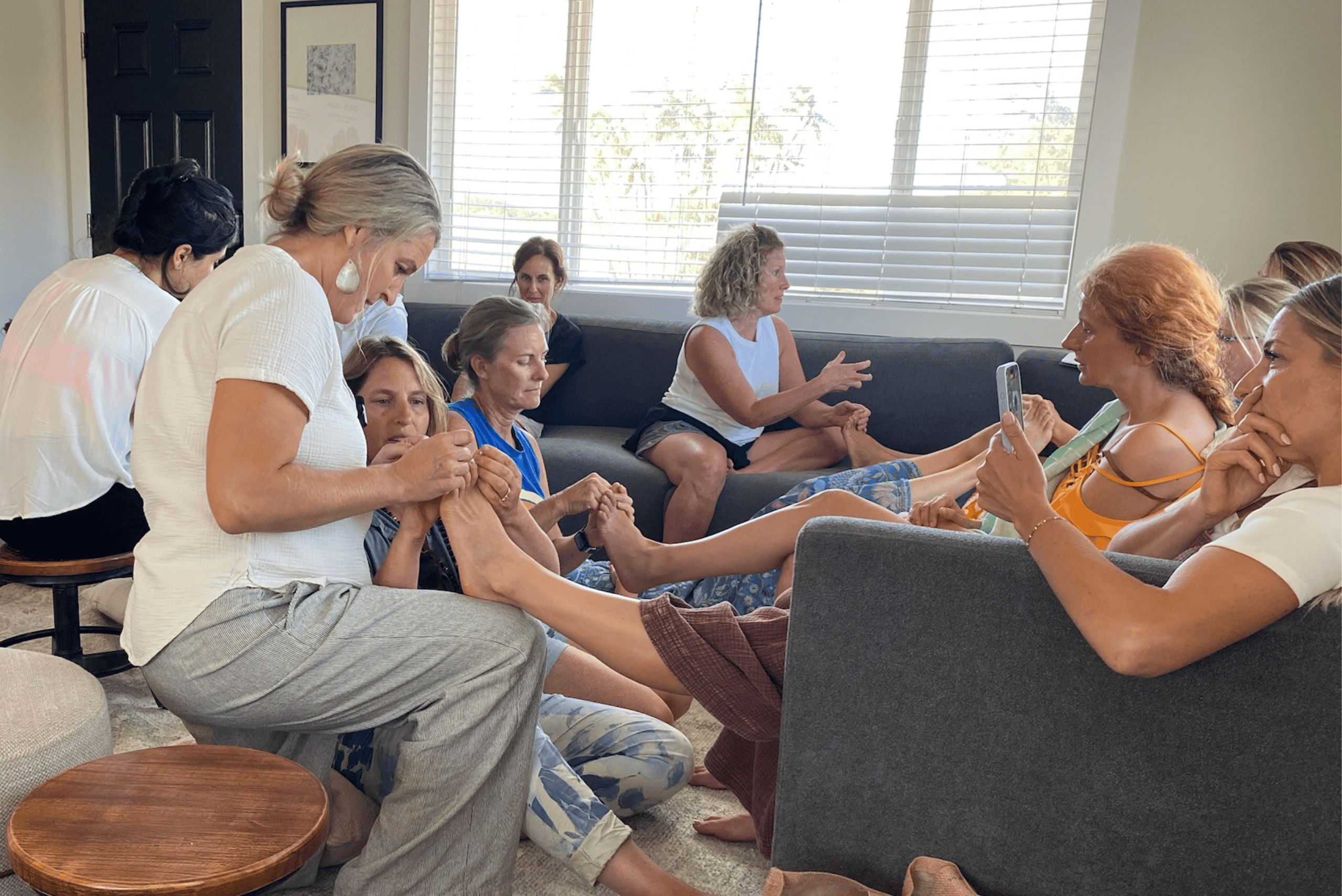
The body holds the perfect blueprint. It has never forgotten how to heal. But it deserves hands that have been taught, thoroughly and honestly and completely, how to listen.
Your education matters. Who you let work on your feet matters.
If you are ready for a complete education, the Integrative Foot Zoning™ Certification at The Bodily Wellness Institute was built for you: the full art and science of Integrative Analysis and the Integrative Zone, paired with nutrition, supplementation, herbalism, biomagnetism, movement and grounding, a complete picture of the terrain, and the frameworks of root-cause healing, taught to the standard this work deserves.
Explore the entire curriculum HERE, and send an email to courses@amberbodilyhealth.com with any questions you have; my team and I will respond.
———-
Amber Bodily is a Master Integrative Foot Zoning™ Practitioner, FootZonologist, Certified Biomagnetism Vitalist Practitioner, Master Herbalist and Aromatherapist, a lymphatic-drainage master, and the founder of Integrative Foot Zoning™ and The Bodily Wellness Institute. She has guided the healing of tens of thousands of people from chronic illness, mystery illness, and dis-ease. Learn more at amberbodilyhealth.com.