Why I Don’t Diagnose
There is a question I am often asked, sometimes by curious newcomers and sometimes by clients who have spent years in the medical system. They want to know what I am doing when I read someone’s feet. Are eager to know what I see. They want to know, in essence, whether I will diagnose them.
The honest answer is that, no, I don’t diagnose, and that the work I do begins exactly where diagnosis ends.
This is not a small distinction. It is the heart of how Integrative Foot Zoning works, and it is the reason the people who come to me, often after years of testing and labeling and prescribing, finally begin to feel something change. To understand why, we have to go back to a deeper question about how the body actually communicates, and what we have been taught to listen for.
❖
The Difference Between a Diagnosis and Analysis
A diagnosis is a category and a label assigned to a specific definition. A name given to a cluster of symptoms once they have crossed a measurable threshold, recognized by the medical field, and assigned an ICD-10 code for labeling and billing. They use it to identify acute disease, classify it according to established criteria, and prescribe an intervention that targets the named condition. But it is worth noting: misdiagnosis is common, and even a correct diagnosis, when placed into a specific label or code, can lead you down a path filled with uncertainty and unexplainable answers.
Even a benign diagnosis does not automatically give you guidance, direction, or a true understanding of what the body is doing. Yes, you might have been diagnosed with XYZ, but why?
The body whispered first.
Then it spoke.
Then it eventually started shouting in a language clear enough for a lab test to confirm.
Diagnosis arrives at the shout.
Analysis is Something Completly Different
Analysis is something different. It begins at the whisper. When I sit down with a client and place my hands on their feet, I am not looking for a category. I am gathering information about what the body is communicating about itself right now, in this body, in this season of this person’s life. Observing color, temperature, texture, the quality of the tissue under pressure, and the structural patterns that have settled into the bones and connective tissue over time. I am analyzing the body’s own signal system as it presents itself.
Analysis is a must, whether the body is whispering or shouting, and often prevents the latter. We need it to truly understand what is going on, no matter the condition, diagnosis, or label. No two bodies are the same, and every body needs to be addressed on a cellular level. Take thyroid disorders as an example: the root disruption can stem from emotional disturbance, chemical or toxin exposure, an underlying tissue pathogen, or environmental factors. Just because there is a diagnosis does not mean the analysis is complete. We still need to look at the body, the systems, the cells, and all of the integrated bodies. Observation is not the absence of rigor.
What Happens When You Don’t Apply Labels
That signal system does not deliver labels. It delivers information, tells me what is congested, what is inflamed, what is exhausted, what is holding tension, and what is asking for support. It tells me the order in which the body wants to be addressed and the burden it is carrying across all four of its integrated bodies.
The body does not name itself or speak in the language of diagnosis.
It reveals itself.
Diagnosis arrives at the shout. Analysis begins at the whisper.
❖
Why I Made the Choice to Observe Rather Than Diagnose
I have written before about how this work entered my life. When my oldest son was a baby, the medical world did everything it knew how to do. He was hospitalized again and again, and given medication after medication. He received diagnoses, and the diagnoses became the lens through which everyone, including me, looked at him. Each label gave us a vocabulary, but none of them gave us a path.
The first foot zoner I ever met said something I will never forget. She told me, after only a few minutes of working on his feet, that she was not a doctor and could not diagnose him, but she could see what his body was telling her. She suggested dietary changes, removing dairy, and additional simple, non-invasive recommendations rooted in what she observed in the signal system of his feet. Within a year, the diagnoses he had been given were retracted by the same medical professionals who had assigned them.
That woman did not diagnose my son. She analyzed him. She touched his feet. It was through this two-step process that she gave us something the diagnostic process had never been able to give us: a way to get to the root cause.
The right question is never simply what is wrong. The right question is always, “What is the body trying to communicate, and what does this body need in order to come back into balance?”
That experience shaped the entire philosophy of my practice. I do not diagnose because diagnosis was not what saved my son. Observation and analysis did. Listening did. Honoring the body’s own intelligence did.
❖
Observation as a Clinical Skill
Observation is often dismissed as soft or unscientific, but anyone who has actually trained in clinical observation knows it is one of the most rigorous disciplines a practitioner can develop. It requires presence, repetition, and a deep working knowledge of anatomy, physiology, embryology, and the body’s energetic architecture. Every great healing tradition in human history has been built on observation refined across generations of practitioners.
When I analyze the signal system of a foot, I draw on nearly two decades of training and the patterns I have seen across tens of thousands of sessions. Color tells me about inflammation, organ burden, circulation status, and toxin accumulation. Beyond color, I read texture, tenderness, the hardenings, the swellings, the crystallized deposits beneath the skin. I read temperature, where circulation is hot and where it has gone cold. I read the structural patterns of the foot itself.

This is clinical observation. It is not guessing. It is not labeling. This is the disciplined analysis of a signal system that the body itself created, applied to a map that is anatomically real, embryologically grounded, and replicable across thousands of sessions.
This is the disciplined analysis of a signal system that the body itself created, applied to a map that is anatomically real, embryologically grounded, and replicable across thousands of sessions.
❖
Why Symptoms Are the Beginning of the Conversation, Not the End
In the conventional model, a symptom is something to be eliminated. The patient comes in with pain, and the goal is to make the pain stop. Or the patient comes in with inflammation, and the goal is to bring the inflammation down. The patient comes in with anxiety, and the goal is to quiet the anxious response. There is a logic to this. Symptoms are uncomfortable, and relieving suffering is a good and worthy thing.
But a symptom is not the problem. A symptom is the body’s communication that something deeper is asking for attention. Inflammation is not the disease. Inflammation is the body’s response to whatever is irritating it. Pain is not the disease. Pain is the body’s report that something is being overworked, blocked, or injured. Anxiety, in many cases, is the nervous system’s response to an actual disturbance, often in the gut, in the adrenals, in unprocessed emotional terrain, or in an environmental burden the body has been quietly carrying.
When we suppress a symptom without addressing what is creating it, we have not healed anything. We have silenced the signal while the underlying cause continues. This is why so many people cycle through symptom management for years without truly getting well. The signal keeps returning because the message was never received.
The Integrative Root Cause Model begins by taking the signal seriously. What is the body trying to communicate? What burden, what deficiency, what unresolved disruption is keeping it from returning to its blueprint? And, crucially, what does this body need in order to get back there?
These questions are not answered by a diagnosis. They are answered by observation, by listening, by analysis, and by a willingness to follow the signal back to its source rather than silencing it at the surface.
❖
The Terrain Determines Whether Healing Holds
In a separate essay, I have explored at length the question of terrain, the internal environment of the body that determines whether disease can take hold and whether healing can stabilize. The 19th century debate between Louis Pasteur and Claude Bernard, and later between Pasteur and Antoine Béchamp, established two competing views of how illness happens. Pasteur argued that the germ was the cause. Bernard and Béchamp argued that the terrain was the cause, and that germs were opportunistic, capable of harm only in a body whose internal environment had already become disordered. Pasteur won the institutional argument, and modern medicine was built on his framework.
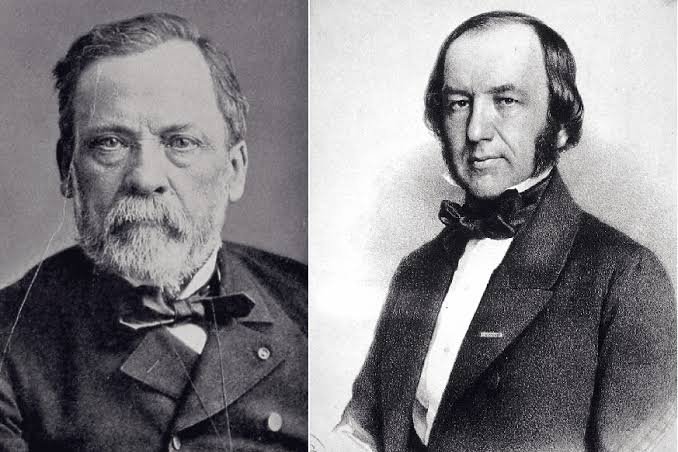
Modern research is quietly catching up to what Bernard and Béchamp observed. The microbiome research coming out of Stanford and the British Gut Project has shown that the diversity of the internal microbial community is among the strongest predictors of health resilience. The epigenetics research pioneered by Bruce Lipton and others has shown that environmental factors, including diet, toxins, emotions, and stress, can modify gene expression without altering the underlying DNA sequence.
The ACE studies established by Vincent Felitti and his colleagues have shown that childhood adversity reshapes the body’s terrain and its disease susceptibility decades into adulthood.
The chronic inflammation research of Peter Libby and others has shown that inflammation is not a disease in itself but a signal from a terrain under burden.
The Benefits of Terrain Restoration
Root cause healing is terrain restoration. When we address what is actually driving the symptom, the inflammation calms, the burden lifts, and the body remembers its blueprint. An ear knows how to be an ear. A liver knows how to be a liver. The body holds the perfect code. Our work as practitioners, and the work of every person learning to care for their own body, is to remove what is interfering with that code and to restore the conditions under which the body has always known how to heal itself.
Diagnosis does not restore terrain. Suppression of symptoms does not restore terrain. The only thing that restores terrain is the careful, ordered support of the body’s own systems of elimination, repair, and rebalance. That work begins with knowing what the body is actually asking for, which means it begins with observation.
Root cause healing is terrain restoration. The body holds the blueprint. Our work is to clear what is interfering with it.
❖
What Happens in Integrative Analysis
When someone comes to me for an Integrative Foot Zoning session, I am doing two distinct kinds of work. The first is Integrative Analysis, which is the observation I have described above. Through both vision and touch, I gather information from the signal system of the feet. Within minutes, I have a working picture of where the body is carrying its primary burdens, which organ systems are most depleted, which emotional terrain is most active, and where the body wants to be supported first.
The second is the Integrative Zone, which is the precise, ordered sequence of treatments and movements applied to the feet to help reset the body’s signal system back toward its blueprint. The sequence matters because the body’s physiology demands it. We open the lymphatic drainage pathways before working the internal organs. We address what is congested before we ask the body to release more. The Integrative Zone is not massage or reflexology. It is a clinical sequence with a particular purpose: to remind the body of the perfect code it already holds.
Supporting All Four Bodies
From there, we take an integrative approach to healing. Dietary recommendations rooted in what the body is asking to be nourished with. Herbs, essential oils, and supplemental supports targeted at the specific burdens revealed during analysis. Lifestyle adjustments that honor the body’s innate detox pathways so the body can release what it has been carrying. Practices that support the emotional, mental, and spiritual bodies, because terrain is never only physical.
I never tell a client what their diagnosis should be. That is not my role, and it is not what the body is asking me to do. I tell them what I see in the feet, what the patterns suggest, and what the body appears to be asking for. The client remains the author of their own healing journey. The medical professionals in their life remain the experts in their fields. My role is to analyze the signal system, support the body’s own intelligence, and help the person in front of me return to alignment with the blueprint that has been quietly waiting inside them the whole time.
❖
Why Root Cause Is the Way Home
Root cause healing is slower than symptom management. There are no promises made for the instant relief that a pill can. It asks more of the person walking the path, because it requires honesty about what the body has been carrying and a willingness to support, rather than override, the body’s own intelligence. It also, in my decades of clinical observation, is what actually holds.
When you address the root, the symptom no longer needs to be suppressed because the body resolves it. When you restore terrain, you do not just feel better. You become more resilient, more nourished, and more deeply at home in your own body. When you analyze the signal system honestly and respond to what the body is actually asking for, you begin to trust your body again, perhaps for the first time in a long time.
What I am offering adds a deeper dimension, providing an approach to working with the body that goes beyond labels. Medical professionals manage acute crises, while integrative practitioners interpret the body’s ongoing signals and help restore balance before a crisis occurs. We listen to the whispers instead of waiting for the shout.
The body is not broken. It is communicating. Your job, and mine, is simply to learn how to listen.
The body is not broken. It is communicating. Your job, and mine, is simply to learn how to listen.
❖
If this resonates and you would like to go deeper into the frameworks referenced here, you are warmly invited to explore the educational offerings at The Bodily Wellness Institute.
Amber Bodily is an Integrative Foot Zoning Practitioner and Master Foot Zonologist, Certified Biomagnetism Vitalist Practitioner, Master Herbalist and Aromatherapist, and the founder of Integrative Foot Zoning™ and The Bodily Wellness Institute. She has guided the healing of tens of thousands of people from chronic illness, mystery illness, and dis-ease. Learn more at amberbodilyhealth.com.